Plinko crypto casino cashiers: BTC, ETH and USDT compared
Before the first drop there is a cashier screen with four choices: the coin, the network, the address and the minimum. Here is how to read each one, with the coin lists the ranked casinos print.
Crypto plinko starts at the cashier, not at the board. Whatever version of the game a lobby carries, the money reaches it through one deposit screen, and that screen asks four questions in a fixed order: which coin, which network, which address (sometimes with a memo), and how much at minimum. Get one of them wrong and the ball never drops.
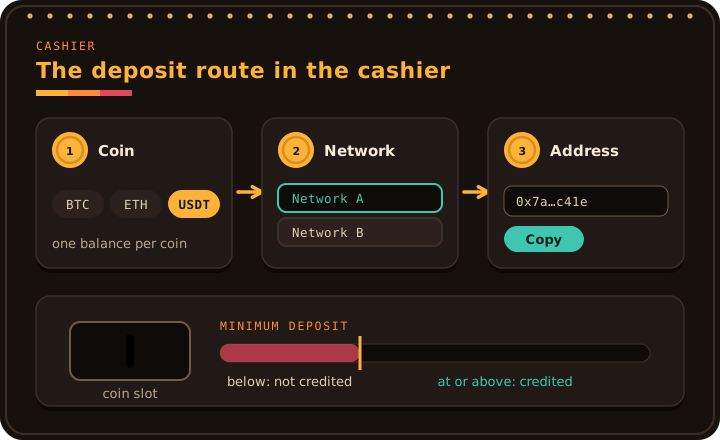
The crypto plinko cashier in four steps
Open the deposit tab before you open any game. Every plinko crypto casino in the deck uses some version of this screen, so the same walk-through works across all of them. The cashier screen looks the same across every entry in the plinko casino sites comparison, which lines up each casino's coin list next to its licence and withdrawal cap.
Pick the coin. This sets the currency your balance is kept in. A balance held in BTC stays in BTC while you play.
Pick the network. One coin can travel on several chains. USDT is the usual case: the cashier may offer it on more than one network, and each option produces a different address.
Copy the address, and the memo if one is shown. Some coins route deposits by a memo or tag on top of the address. If the cashier displays one, the transfer needs both.
Read the minimum next to the coin. It is per coin, not per account, and it is printed on the deposit screen or in the payment section of the terms.
What to look for on the deposit screen
The network name written beside the address, not just the coin logo.
A memo or tag field, and a warning if it is required.
The per-coin minimum, and any line on what happens to a deposit below it.
Whether the balance will show in the coin itself or converted into a display currency.
Picking a network: where the mistakes happen
The coin in your wallet and the coin in the cashier must be on the same chain. Sending USDT from one network to an address generated for another is the classic lost deposit, and nothing on the casino side can pull it back once it leaves your wallet.
Three choices in the cashier, in order. The network has to match on both ends, and each coin carries its own minimum: a transfer under it is the one the cashier does not show.
Check the first and last few characters of the pasted address against the screen. Then send from a wallet that lets you choose the same network by name. The fee for that transfer goes to the network, not to the casino; the split between the two is covered in our note on network and operator charges.
Deposit minimums the terms print
Minimums matter more than they look, because a transfer below the line may not count at all.
Bitcasino.io sets a minimum deposit for each coin, and cl. 5 says a deposit below it is void.
Rocketpot puts its minimum at 0.001 BTC in cl. 10.2.
For the other ranked casinos the cells on the minimum are empty, so read the cashier screen itself before you send. The ranking cards on the casino-by-casino deck carry the clause numbers next to each operator.
Plinko crypto casino coin lists, card by card
The coin count is a practical filter: if your wallet holds a coin the cashier does not list, you pay a conversion before you ever reach a board. Here is what the ranked plinko crypto casino terms and cashier pages show, as the deck records them.
Bitcasino.io: 12 to 13 coins on its list.
Rocketpot: 13 coins on the list.
Sportsbet.io: five coins named, with the list left open for more.
Winz.io: 12 coins on the list (cl. 4.1).
Rainbet: nine coins named, list left open.
Winna: ten coins named, list left open.
Bitsler: its BGaming Plinko page names Bitcoin and Ethereum “and other cryptocurrencies”.
Blockbet, Metaspins, Shuffle.com, TG.Casino and Hyper Lucky have no coin count in the deck, and Vave has none either. For those, the deposit screen is the only list to trust.
A “list left open” means the operator names some coins and says others are accepted, without committing to which. Treat it as a reason to open the cashier before registering, not as a promise.
Bitcoin plinko or a stablecoin balance?
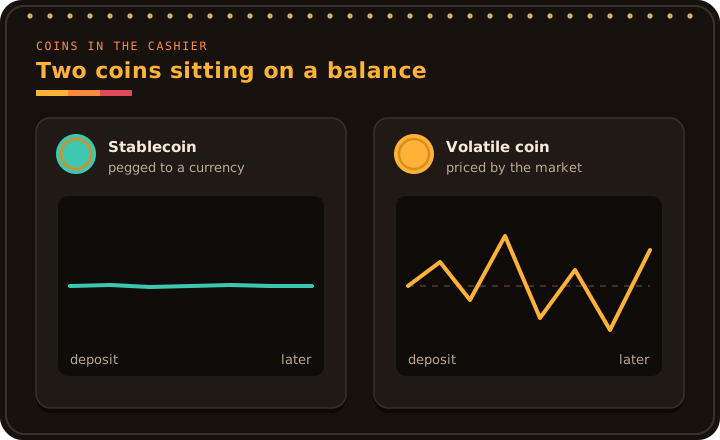
This is the decision most players skip, and it changes how a session feels. A bitcoin plinko balance moves in value twice: once with each drop, and once with the BTC price between drops. A USDT balance only moves with the drops.
The same deposit, held two ways. A stablecoin tracks the currency it is pegged to; a volatile coin keeps moving while it sits in the casino balance, before a single round is played.
A made-up example shows the difference. Say you deposit 0.01 BTC and it is worth US$600 at the time. You play a few rounds and end with exactly 0.01 BTC again. If BTC fell 5% during those hours, the balance is now worth US$570, even though the board returned everything you staked. The same session in USDT would end at the same dollar figure it started with.
Neither choice is better in general. It depends on whether you want the price exposure on top of the game's own swings. For crypto plinko played in short sessions, many players keep the stake in a stablecoin and hold volatile coins in their own wallet instead; that is a preference, not a rule.
Plinko USDT: one more check
A plinko USDT deposit needs the network check twice, because USDT is the coin most often offered on several chains. Also look at how caps are written: Bitcasino.io and Winz.io both state their withdrawal ceilings in USDT, so a stablecoin balance can be compared to those caps without a conversion. The caps themselves are listed on the page about money leaving an account.
What a plinko crypto casino does not change with the coin
The coin you pick does not change the ID rules. An identity clause applies to the account whatever currency the balance sits in, and several casinos in the deck tie it to the first withdrawal or to a trigger event. Read the page on document requests before assuming a crypto deposit keeps documents out of the picture.
The coin also does not change the game. A studio's printed return is the same whether the stake is in BTC or USDT: Spribe prints 97% RTP for its Plinko and BGaming prints 99%, each on its own game page, read 16 September 2026.
A crypto plinko checklist before the first deposit
Your coin is on the cashier list, not just in the footer logos.
The network in your wallet matches the network written beside the address.
A memo, if shown, is copied along with the address.
The deposit is above the per-coin minimum.
You know whether you want a volatile or a stablecoin balance.
You have read the withdrawal side (caps, ID clause) before sending anything.
When the deposit does not show up
First look at the transaction in a block explorer from your own wallet: if it is confirmed on the chain you picked, send support the transaction hash, the coin, the network and the address you used. Keep the message short and factual, and keep a copy. A plinko crypto casino can only trace a transfer that reached an address it generated on the matching network.
Crypto plinko is still gambling, and the balance is your own money. Play only with money you can lose, and set a deposit limit in the account before the session starts.
Questions people actually type
Does the coin I deposit change the Plinko game itself?
No. The coin decides what currency the balance is kept in; the rows, risk setting and paytable are set inside the game. A studio's printed return does not depend on the coin either: BGaming prints 99% RTP for its Plinko regardless of how the account was funded. What the coin does change is how the balance moves in value between drops.
What happens if I send USDT on the wrong network?
The cashier generates an address for one chain. A transfer made on a different chain may not arrive in the account, and a blockchain transfer cannot be reversed from the casino side. Match the network name in your wallet to the one written beside the deposit address, and send a small amount first if the cashier allows it.
Is a deposit below the minimum returned?
Read the payment clause before relying on that. Bitcasino.io, for example, says in cl. 5 that a deposit below the per-coin minimum is void, and Rocketpot sets 0.001 BTC as its minimum in cl. 10.2. Where the terms say nothing, ask support in writing before sending a small test amount.